PSYCHOCORPOREAL EXPLORATION RETREAT
Through Dance
Órgiva · Andalusia, Spain
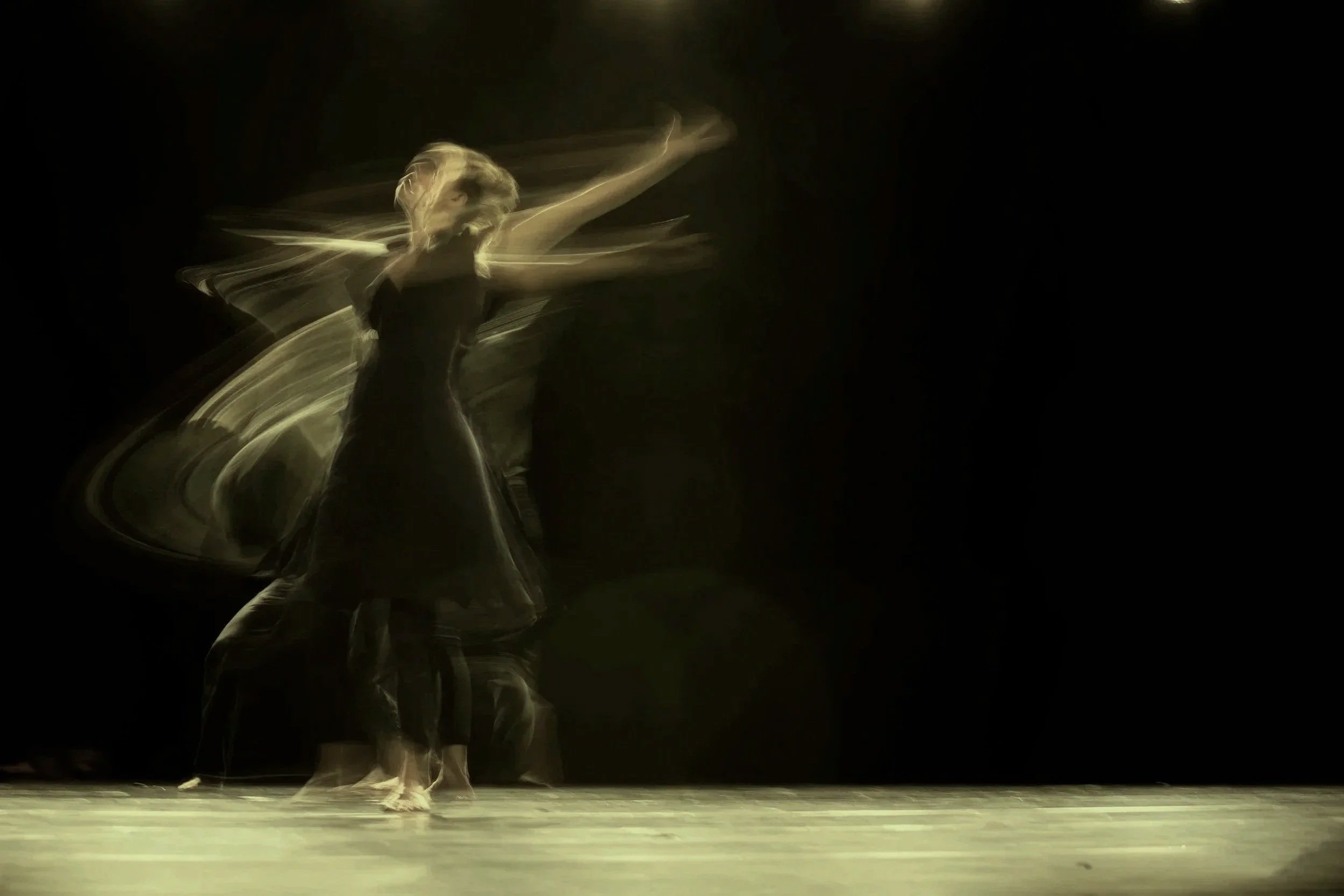
Movement brings to light what words leave unspoken.
Through movement, dance, and therapeutic work, this retreat offers a space to explore what the body reveals about our personal history, our emotions, and our ways of relating.
Origin
We met in Órgiva, in southern Spain, in the region of Andalusia. Salomé is a classical dance teacher and Agnès is a psychotherapist. We quickly discovered that we shared a common interest in understanding human beings and a similar vision of what supports personal growth: the importance of connection, kindness, self-awareness, and the quality of our relationships with others.
We also share a particular interest in human behaviour, relational dynamics, and the often unconscious mechanisms that influence our choices, our emotions, and the way we move through the world.
This shared perspective, rooted in our respective professional practices, naturally found expression in our friendship. It was within this relationship of trust, this genuine closeness — both personal and professional — and the dialogue between our two approaches that the idea for this retreat was born.
When Agnès began attending Salomé’s dance classes, she realised that Salomé’s approach to dance extended far beyond technical instruction. The classes are built around demanding physical work, including floor barre, barre work, mobility, coordination, and movement. They also include exercises exploring emotional expression, our relationship with the body, our capacity to feel, express, or contain certain emotions, and the reactions that emerge in response to effort, difficulty, or the gaze of others.
As the work unfolds, certain tendencies often become particularly visible: perfectionism, the need for control, fear of making mistakes, self-criticism, difficulty letting go, comparison, frustration, or difficulty identifying and expressing emotions. The exercises also make it possible to observe each person’s relationship with their emotions. Are they expressed freely, controlled, avoided, amplified, or difficult to access?
At the end of each class, Salomé consistently creates space for participants to reflect on and share their experience. It was through these conversations that our shared reflection began.
We noticed that the reactions emerging through movement were rarely related solely to the exercise itself. More often, they seemed to reflect much older mechanisms. From the earliest years of life, and often before we have the words to understand what we are experiencing, we develop strategies that help us adapt to our environment, obtain the attention we need, preserve the bonds with the people we depend on, and protect ourselves from difficult experiences. We learn how to respond to fear, rejection, insecurity, and unpredictability. We also absorb family beliefs, ways of communicating, unspoken rules, roles, and assumptions about the world that gradually come to feel natural.
These mechanisms do not express themselves only through our thoughts, behaviours, or relationships. They also manifest in the body. In this context, movement acts as a revealer. When the body is sufficiently engaged, habitual reactions become easier to observe. Physical work allows us to observe directly mechanisms that often go unnoticed in everyday life. Therapeutic work then makes it possible to analyse them, understand their origins, their function, and their present-day consequences.
This retreat was born from the meeting of these two approaches. Our intention is not to eliminate the mechanisms each person has developed throughout their life, but to learn how to recognise them, understand their function, and explore whether they still serve us in the present. We seek to distinguish what belongs to adaptation from what belongs more deeply to ourselves.
We believe that when a mechanism becomes conscious, it gradually ceases to operate in a fully automatic way. It then becomes possible to develop greater freedom, choice, and responsibility in the way we live, feel, and relate to the world.
THE RETREAT
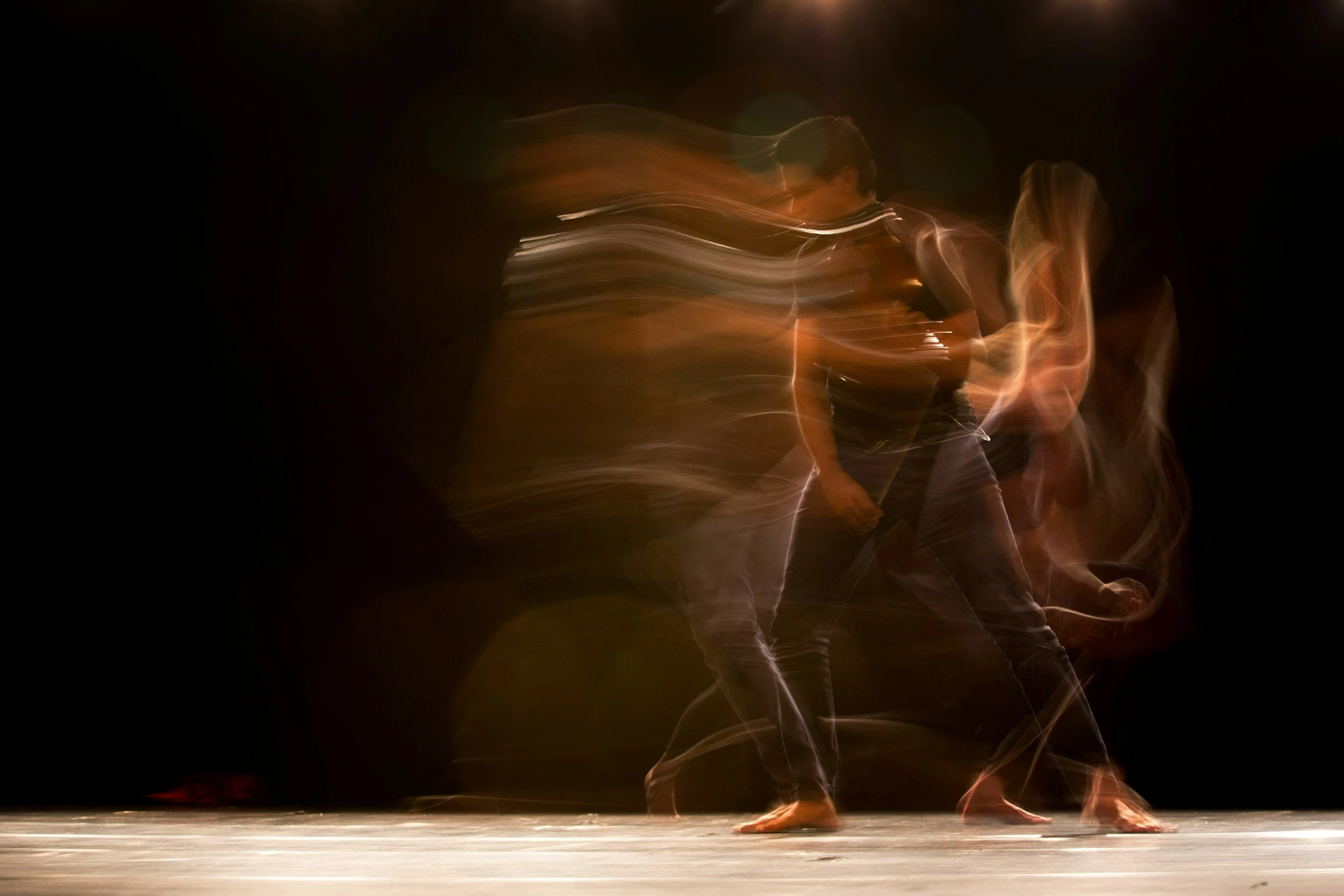
The retreat is designed as a progressive process. It is not based on a succession of isolated exercises, but on a progression that unfolds across the week, each day, and each stage of the work. The overall aim is to help participants identify certain physical, emotional, and psychological mechanisms that influence the way they are, move, feel, and relate to others.
The body is the starting point. The work begins with structured physical engagement: floor barre, barre work, mobility, coordination, movement, and dance. The goal is not technical performance, but engaging the body for long enough that habitual mechanisms of control, compensation, or protection become more perceptible. As the body becomes engaged and physical fatigue appears, dominant mental activity can begin to soften. The body becomes more available, less controlled, and certain elements that are usually hidden may begin to emerge.
From this state of physical engagement, we offer exercises exploring the relationship with the body, emotional expression, the relationship to movement, the capacity to feel, express, or contain certain emotions, and reactions to effort, difficulty, failure, the gaze of others, or loss of control. These exercises make it possible to observe where blocks, resistance, tension, dissonance, fears, automatisms, or difficulties in expression emerge.
Our role is to accompany this process of observation. Drawing on our respective experiences in dance and psychotherapy, we help participants identify what is manifesting through the body and movement: areas of holding back, moments where intention and action become disconnected, difficulty letting go, mechanisms of control, emotional reactions, avoidance, inhibition, or repetitive patterns. The first step is simply to observe precisely what is happening, without immediately trying to interpret it.
Once these elements have been identified, a space for speaking allows them to be articulated and expressed. The group plays an important role here. It allows each participant not to remain alone with what they are discovering, to hear other experiences, to recognise similar mechanisms in others, and to benefit from a mirroring effect. It also makes it possible to observe how certain patterns emerge in relationship: the need to compare oneself, fear of judgement, difficulty taking one’s place, the tendency to remain silent, to justify oneself, to take care of others, or to withdraw. The group thus becomes a space for relational observation as much as a space of support.
From what has been expressed, the therapeutic work seeks to understand the origin, function, and present place of these mechanisms. We explore what they have protected, what they have made possible, when they may have developed, which beliefs sustain them, which emotions have been repressed or avoided, and how they continue to influence the body, relationships, choices, and the way a person inhabits their life today. The aim is not to judge these mechanisms, but to understand why they came into being and whether they remain adapted to present circumstances.
When certain blocks, patterns, or mechanisms have been recognised and understood, it becomes possible to observe more clearly the place they occupy in a person’s life. We then explore how they manifest concretely: in the body, posture, breathing, relationships, decision-making, responses to difficulty, the experience of emotion, or ways of protecting oneself. If the participant feels ready, the work may then move towards a gentle and progressive confrontation with what has been identified: a fear, a belief, an inhibition, anger, sadness, difficulty taking one’s place, or difficulty expressing something. This stage takes place without pressure, respecting each person’s pace, and with the support of the group, the framework, and the therapeutic process.
Returning to the body is an essential stage. After observing, expressing, and understanding, we return to movement, stretching, dance, or more integrative physical exercises. This return makes it possible to observe whether something has shifted: a tension, a breath, a posture, an openness to movement, a greater capacity to occupy space, to express an emotion, or to enter into relationship with others. The body then becomes a concrete indicator of what has been understood, released, shifted, or begun to transform.
The week follows this same progressive logic. The first stages are devoted to establishing the framework, trust, and safety necessary for the work. The physical and psychological intensity then increases gradually over the first days, reaching a deeper point of exploration in the middle of the retreat. The final days are devoted to integration, meaning-making, and observing what has changed in the body, in self-perception, and in the understanding of one’s own mechanisms.
Each day follows the same overall movement. The morning is primarily dedicated to physical work. A period of reflection and sharing follows, allowing participants to name what they have experienced and identify the emotions, thoughts, and mechanisms that have emerged. Later in the day, a deeper therapeutic session helps connect these observations with personal history, beliefs, roles, protective mechanisms, and relational patterns. Finally, a return to the body through stretching, movement, or dance allows participants to begin integrating what has been observed and understood.
The overall aim of the retreat is therefore to accompany a process that unfolds in several stages: engaging the body, allowing things to emerge, observing, identifying, expressing, understanding, making connections, confronting when possible, and then returning to the body in order to experience and integrate. This ongoing movement between bodywork, psychological observation, reflection, and movement lies at the heart of our approach.
After this week of work, participants may have developed a deeper awareness of themselves and the way they function, while opening a space in which something can begin to be released.
Practical Information
Órgiva · Alpujarra · Andalusia, Spain
Location
Duration
6 days
maximum 8 participants
Group size
French · English · Spanish · German, depending on the retreat dates
Languages
Price
900 euros
Bodywork · Group therapeutic work · Lunches
Included
Registration
contact@lalinearoja.es
Accommodation · Transport · Breakfasts · Dinners
Not included
About us
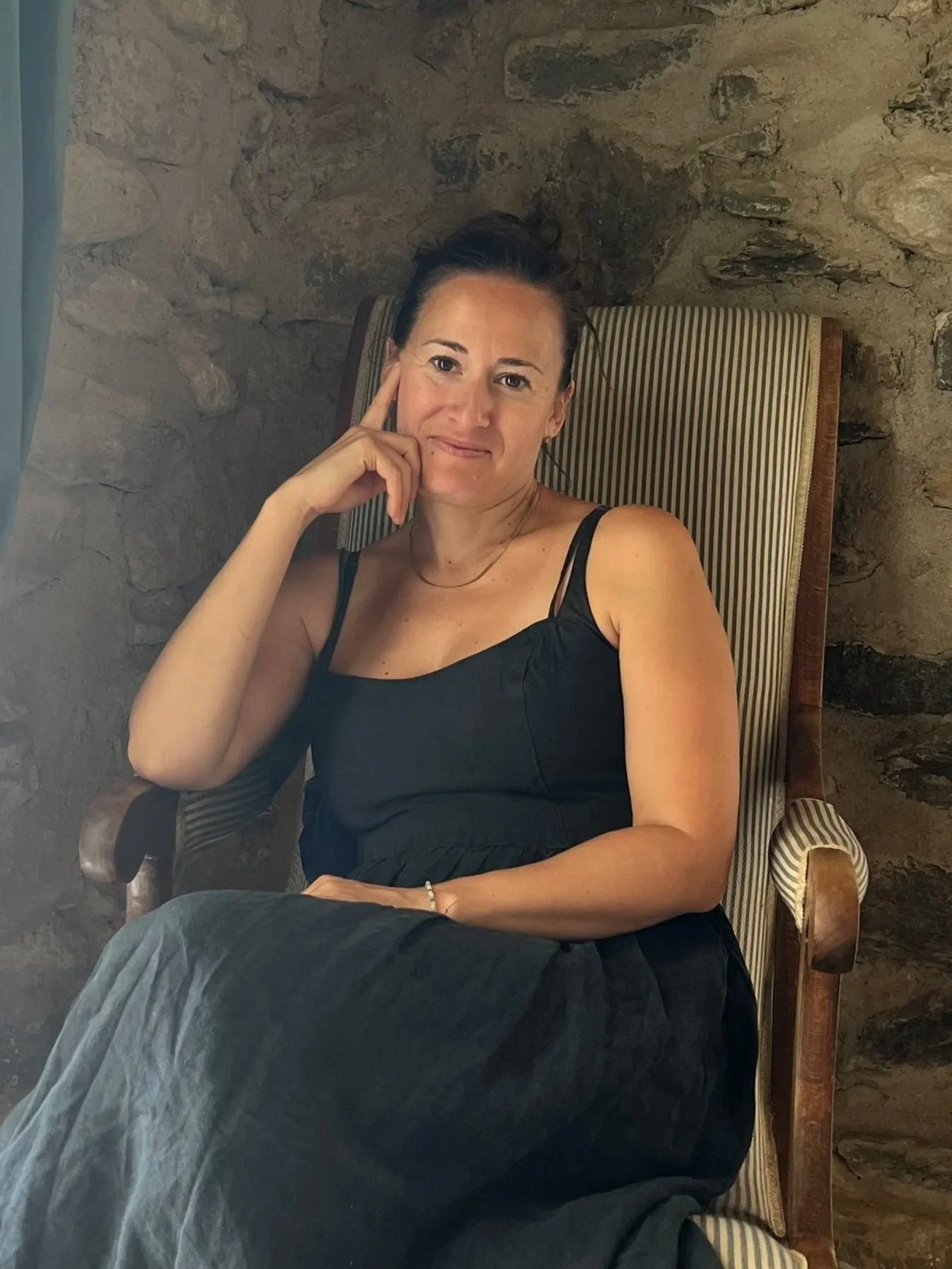
Salomé is a classical dance teacher, theatre artist, and performer. Born in Berlin, she grew up between different cultures and speaks French, German, Spanish, and English.
After studying Fine Arts in Granada, she continued her artistic training in Paris, notably at the Cours Florent. Her personal stage work combines theatre, dance, physical presence, humour, and expression.
Salomé has travelled and worked in a variety of artistic settings. She founded a dance and theatre school in Granada, where she taught and developed her own pedagogical approach to movement. Having lived in Órgiva for several years, she now teaches classical dance there while continuing to create and perform her own work.
Her work extends beyond the technical teaching of dance. She is particularly interested in the way the body responds to effort, movement, being seen, difficulty, and emotional expression. In her classes, dance becomes a tool for observation, making visible tensions, emotions, resistance, blocks, and mechanisms of control that are not always accessible through words.
Role in the Retreat
Bodywork · Floor Barre · Barre Work · Movement · Expression · Body Awareness
Salomé Sprotte
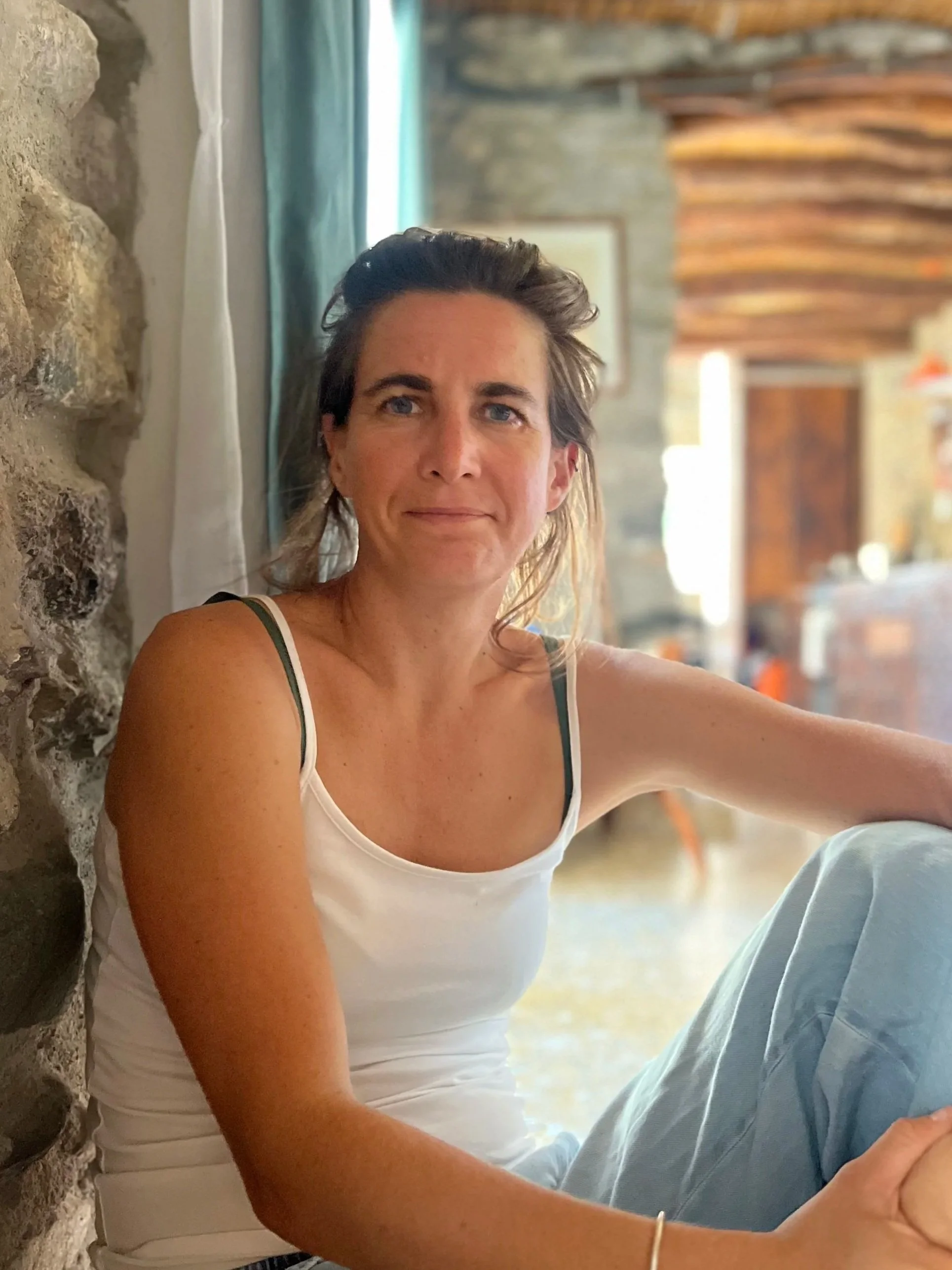
Agnès Bussière is a psychotherapist. Born in Paris, France, she initially trained in law and practised as a lawyer before redirecting her professional path towards psychotherapy.
She works with individuals and groups around personal, relational, and existential issues. Her approach focuses particularly on adaptive mechanisms, relational patterns, beliefs developed throughout personal history, and the lasting impact of certain traumatic or emotionally significant experiences.
Having lived in Órgiva for the past seven years, she works and lives between different languages and cultures. She speaks French, English, Spanish, and German.
Her work aims to help people better understand the mechanisms that shape the way they live, feel, and relate to others. She supports the identification of deeply held beliefs, learned roles, protective strategies, and repetitive patterns that may limit inner freedom and the capacity for authentic connection.
Today, she is developing this work through psychocorporal retreats, convinced that the body and movement provide access to dimensions of experience that are not always accessible through words alone.
Role in the Retreat
Group Reflection · Group Therapeutic Work · Meaning-Making · Relational Patterns · Adaptive Mechanisms · Integration
Agnès Bussière
Upcoming dates
August 2–7, 2026
September 20–25, 2026
December 17–22, 2026